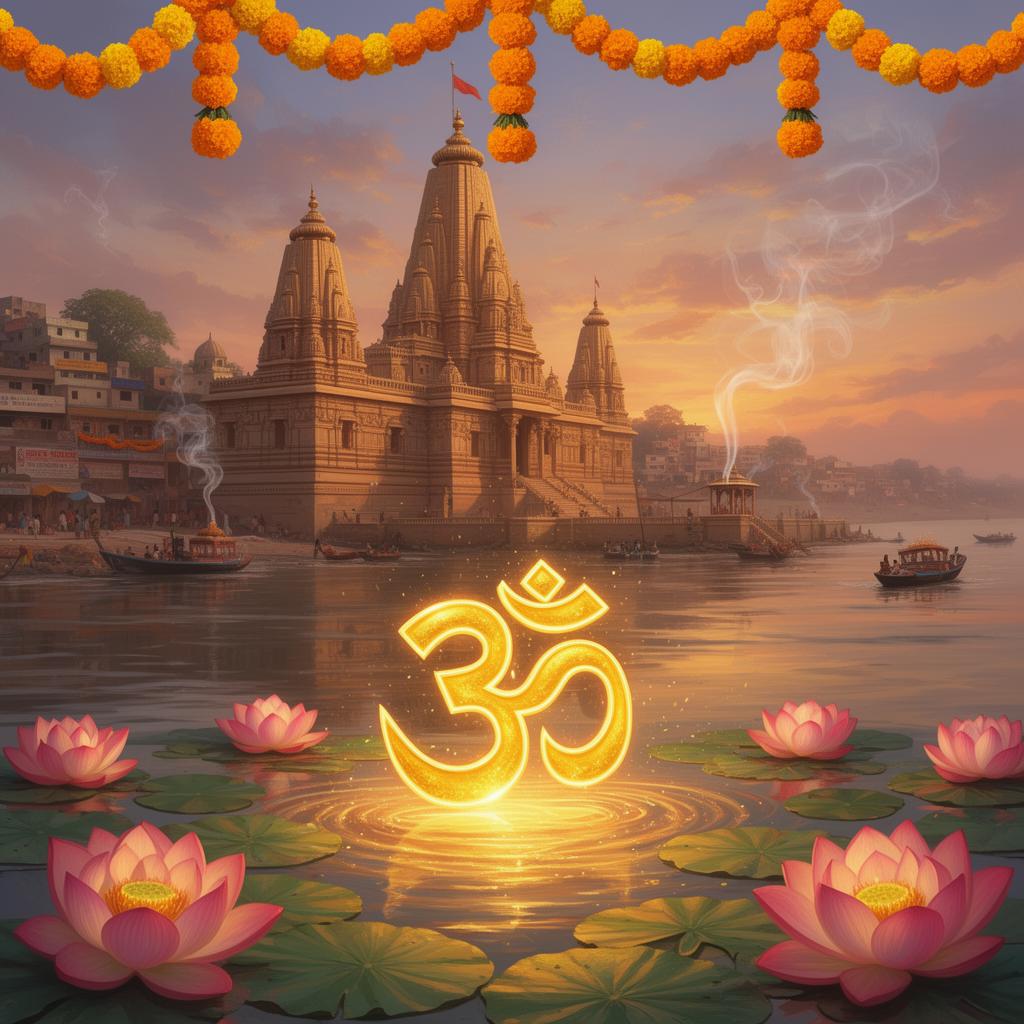
A Tapestry Woven Through Millennia: Introducing Hinduism
Imagine a river, not just any river, but one that has flowed for countless ages, drawing water from myriad sources, ever-changing yet eternally the same. This, in many ways, is the essence of Hinduism – a spiritual tradition so vast, so ancient, and so multifaceted that it defies easy definition. Unlike many world religions with a singular founder or a definitive starting point, Hinduism is less a rigid doctrine and more an organic, evolving tapestry woven from the spiritual insights, philosophical inquiries, and diverse practices of a subcontinent over thousands of years. It’s an “eternal way,” often called Sanatana Dharma, signifying its timeless, universal principles and its deep-rooted connection to an enduring cosmic order.
To embark on a journey through Hinduism is to step into a vibrant landscape of deities, rituals, philosophies, and narratives that have shaped the spiritual heart of India and, increasingly, the world. It’s a tradition that embraces paradox: simultaneously ancient and remarkably modern, deeply personal and profoundly communal, richly diverse and unified by underlying truths.
Echoes from Antiquity: The Origins and Early Streams
Pinpointing the exact "beginning" of Hinduism is like trying to find the source of our metaphorical river. Its roots stretch back into the mists of prehistory, predating recorded time in ways that many other traditions cannot claim. Archaeological discoveries in the Indus Valley Civilization (c. 2500–1900 BCE), particularly at sites like Mohenjo-Daro and Harappa, reveal evidence of early spiritual practices that bear striking resemblances to later Hindu traditions. These include depictions of figures in yogic postures, reverence for water, and symbols that hint at early forms of Shiva worship and goddess worship. While the precise connection between the Indus Valley Civilization and later Vedic traditions is a subject of ongoing scholarly debate, it’s clear that the Indian subcontinent was a crucible of spiritual innovation long before the arrival of what we now recognize as the Vedic people.
The generally accepted bedrock of Hinduism lies in the Vedic period, which scholars typically date from around 1500 BCE to 500 BCE. During this era, a collection of sacred texts known as the Vedas began to be compiled. These were not written down initially but were orally transmitted with incredible precision across generations, considered to be śruti ("that which is heard") – divinely revealed knowledge apprehended by ancient sages (rishis) in deep states of meditation.
The Vedas: Hymns of Cosmic Order
The Vedas, meaning "knowledge," are the oldest and most authoritative scriptures in Hinduism. They are divided into four main collections:
- Rig Veda: The oldest and most revered, containing hymns, prayers, and mythological accounts praising various deities (devas) like Indra (god of thunder and war), Agni (god of fire), and Surya (sun god). These hymns often speak of a cosmic order (Rta) and the power of sacrificial rituals (Yajna) to maintain it.
- Sama Veda: Consists primarily of Rig Vedic hymns arranged for chanting during rituals, focusing on melodies and musical expressions of devotion.
- Yajur Veda: Contains prose mantras and sacrificial formulas, detailing the procedures for performing various rituals and ceremonies.
- Atharva Veda: A more diverse collection, including spells, incantations, herbal remedies, and philosophical speculations, often addressing practical concerns of daily life.
Within each Veda, there are further divisions: the Samhitas (the hymn collections themselves), the Brahmanas (detailed commentaries on rituals), the Aranyakas ("forest treatises" for hermits), and the culminating philosophical explorations known as the Upanishads.
The Vedic worldview was deeply intertwined with ritual and cosmic energies. The hymns speak of a pantheon of gods and goddesses, often personifications of natural forces, and elaborate fire sacrifices were central to maintaining harmony between the human and divine realms. Yet, even in this early stage, we find the nascent seeds of profound philosophical inquiry into the nature of reality, the self, and the ultimate truth.
The Dawn of Philosophical Inquiry: The Upanishads
As the Vedic period progressed, a new wave of spiritual thought began to emerge, shifting emphasis from external ritual to internal realization. This profound intellectual and spiritual ferment crystallized in the Upanishads (c. 800-200 BCE), which literally means "sitting near devotedly," suggesting the transmission of secret doctrine from a guru to a disciple. These texts form the philosophical heart of Hinduism, marking a significant transition from polytheistic ritualism to monistic and pantheistic metaphysical speculation.
The Upanishads introduce and deeply explore several cornerstone concepts that have defined Hinduism ever since:
- Brahman: The Ultimate Reality. This is perhaps the most profound concept. Brahman is not a god among gods, but the supreme, ultimate reality of the universe; the fundamental ground of all existence. It is indescribable, ineffable, beyond all attributes, yet it is the source and sustainer of everything. It is often described as consciousness itself, infinite, eternal, and unchanging.
- Atman: The True Self. The Upanishads declare that the individual soul, or Atman, is not separate from Brahman. "Tat Tvam Asi" – "Thou Art That" – is one of the most famous declarations, asserting the essential identity between the individual self and the cosmic absolute. Our true self is not our body, our mind, our ego, or our personality, but the eternal, unblemished spark of divinity within us.
- Moksha: Liberation from Samsara. The cycle of rebirth (Samsara) driven by actions (Karma) is seen as a process that continues until one attains spiritual liberation. Moksha is the ultimate goal – a state of release from the cycle of birth, death, and rebirth, achieved through the realization of the unity between Atman and Brahman. It's not about going to a heavenly realm, but about transcending all suffering and achieving a state of blissful, unconditional freedom.
- Karma: The Law of Cause and Effect. Actions, whether good or bad, spoken or thought, create consequences that rebound upon the doer. While often simplistically understood as "what goes around comes around," Karma is a complex moral and ethical framework that shapes an individual's experiences in this life and future lives. It is not divine judgment but an impersonal law of spiritual physics.
The Upanishads are characterized by dialogues, parables, and profound meditations, offering diverse pathways to understanding these truths. They lay the groundwork for the various philosophical schools (Darshanas) that would later emerge within Hinduism, all grappling with the implications of Brahman, Atman, and the path to Moksha.
The Epic Age and the Bhagavad Gita
Following the Vedic and Upanishadic periods, Hinduism continued to evolve, giving rise to grand epic narratives that brought these profound philosophical concepts to life through compelling stories of gods, heroes, and moral dilemmas. Two of the most significant epics are the Ramayana and the Mahabharata, the latter of which contains one of Hinduism's most beloved and influential scriptures: the Bhagavad Gita.
The Bhagavad Gita: A Dialogue on Dharma
The Bhagavad Gita, often called the "Song of God," is a philosophical poem embedded within the sprawling epic of the Mahabharata. It takes place on a battlefield, just prior to a cataclysmic war between two warring families, the Pandavas and the Kauravas. The central dialogue occurs between Arjuna, a great warrior, and his charioteer, Krishna, who is an avatar (incarnation) of Vishnu.
Arjuna is overcome with despair at the prospect of fighting against his own relatives and teachers. He questions the righteousness of war and the meaning of his duty. In response, Krishna delivers a profound discourse that addresses not only Arjuna's immediate dilemma but also universal questions about life, death, duty, action, and liberation. The Bhagavad Gita masterfully synthesizes many of the Upanishadic concepts and offers practical paths to spiritual realization.
Key teachings of the Bhagavad Gita include:
- Dharma: Righteous Conduct and Cosmic Order. Krishna elucidates the concept of Dharma, which is central to Hindu life. Dharma is often translated as "righteous conduct," "duty," "moral law," or "that which sustains the universe." It encompasses one's ethical responsibilities, social obligations, and moral principles. Arjuna's dilemma is resolved when Krishna explains that his Dharma as a warrior is to fight for justice, even against kinsmen.
- Karma Yoga: The Path of Action. The Gita emphasizes the importance of performing actions without attachment to their results. This is Karma Yoga – selfless action, done as an offering, without ego or expectation. It teaches that one must fulfill their duties diligently but remain detached from the fruits of their labor.
- Bhakti Yoga: The Path of Devotion. Krishna reveals himself as the Supreme God, encouraging Arjuna to cultivate unwavering devotion (Bhakti) to him. Bhakti Yoga emphasizes love, surrender, and adoration of the Divine, often through prayer, chanting, and ritual. For many Hindus, this is the most accessible and potent path to Moksha.
- Jnana Yoga: The Path of Knowledge. While acknowledging the significance of action and devotion, the Gita also reiterates the Upanishadic wisdom of knowledge (Jnana) – the realization of the true nature of Atman and Brahman.
- The Nature of the Self: Krishna reminds Arjuna that the Atman is eternal, unkillable, and distinct from the perishable body. Therefore, the physical death of the body does not affect the eternal soul.
The Bhagavad Gita is not merely an ancient text; it is a living scripture, offering guidance and solace to countless individuals grappling with moral choices, existential questions, and the pursuit of spiritual growth. Its timeless wisdom has resonated across cultures and centuries, making it one of the most translated and studied religious texts in the world.
The Vastness of Devotion: Gods, Goddesses, and Bhakti
While the Upanishads and Bhagavad Gita laid the philosophical groundwork, the popular practice of Hinduism evolved to embrace a rich and diverse pantheon of gods and goddesses, often viewed as various manifestations of the one ultimate Brahman. This polytheistic imagery within a monistic philosophical framework is a characteristic feature of Hinduism.
The concept of Ishvara (the Supreme Personal God) gained prominence, allowing devotees to relate to Brahman in a more concrete, loving way. The most prominent deities, often forming the Trimurti ("three forms"), are:
- Brahma: The Creator. Though less worshipped directly today, Brahma is responsible for the creation of the universe.
- Vishnu: The Preserver. Vishnu is revered as the preserver and protector of the universe, who incarnates (takes avatar) on Earth in various forms to restore Dharma when the cosmic balance is threatened. Krishna and Rama are two of his most beloved avatars.
- Shiva: The Destroyer and Transformer. Shiva is a complex deity, representing both destruction and recreation, asceticism and fertility. He is often associated with yoga and meditation.
Alongside these masculine deities, goddesses (Devi) play an equally significant role, often revered as the embodiment of divine energy (Shakti). Important goddesses include:
- Saraswati: Goddess of knowledge, music, and arts.
- Lakshmi: Goddess of wealth, prosperity, and auspiciousness.
- Parvati/Durga/Kali: Manifestations of the divine mother, representing power, protection, and fierce compassion.
The devotional path of Bhakti, which the Bhagavad Gita champions, blossomed into a vibrant and diverse movement across India, giving rise to countless temples, hymns, festivals, and spiritual traditions centered on loving devotion to a chosen deity (Ishta Devata). This emphasis on personal relationship with the divine made spirituality accessible to all, regardless of caste, gender, or social status.
Diversity & Unity: The Many Paths of Sanatana Dharma
One of the most striking features of Hinduism is its extraordinary diversity. There is no single creed, no single founder, no centralized authority. Instead, it is a vast family of traditions, schools of thought, and devotional practices that share a common spiritual framework. This inclusivity often leads to the phrase, "Sanatana Dharma is not a religion, but a way of life."
This diversity manifests in several ways:
- Theistic Pluralism: While many Hindus may primarily worship one deity (e.g., Vishnu, Shiva, Devi), they generally respect and acknowledge the validity of other deities and their worshippers. It's often understood that all divine forms are aspects of the one ultimate reality.
- Philosophical Schools (Darshanas): Over centuries, various philosophical schools emerged, all rooted in the Vedas and Upanishads, but offering different interpretations and methodologies. The six orthodox (Astika) schools are Nyaya, Vaisheshika, Samkhya, Yoga, Mimamsa, and Vedanta. Vedanta, particularly its Advaita (non-dualistic) sub-school propounded by Adi Shankara, is highly influential, asserting the ultimate oneness of Atman and Brahman.
- Four Aims of Human Life (Purusharthas): Hinduism recognized four legitimate aims of human existence:
- Dharma: Righteous conduct, ethics, moral duty.
- Artha: Prosperity, wealth, material well-being (ethically acquired).
- Kama: Pleasure, enjoyment, love (within ethical bounds).
- Moksha: Liberation from the cycle of rebirth, ultimate spiritual freedom.
- Stages of Life (Ashramas): Traditionally, Hindu life was structured into four stages (Ashramas):
- Brahmacharya: Student life, focused on learning and spiritual discipline.
- Grihastha: Householder life, focused on family, work, and social duties.
- Vanaprastha: Forest dweller/retirement, gradual withdrawal from worldly concerns.
- Sannyasa: Renunciation, complete dedication to spiritual liberation.
- Rituals and Festivals: Hinduism is rich in vibrant rituals, ceremonies, and festivals that mark various stages of life, seasons, and divine celebrations. From daily puja (worship) in homes and temples to grand festivals like Diwali (festival of lights) and Holi (festival of colors), these practices foster community, devotion, and a sense of sacredness in everyday life.
Despite this apparent diversity, a unifying thread runs through Hinduism: the belief in the ultimate reality of Brahman, the divinity of the Atman, the law of Karma shaping destiny, the goal of Moksha, and the overarching importance of Dharma as the guiding principle for a righteous and harmonious life. These fundamental concepts provide a coherent framework that accommodates a multitude of expressions.
Beyond India: Hinduism's Enduring Influence
For millennia, Hinduism flourished predominantly in the Indian subcontinent. However, like its ever-flowing spiritual river, its influence has extended far beyond its geographical origins. Through trade, cultural exchange, and migration, Hindu ideas, art, architecture, and spiritual practices spread throughout Southeast Asia, influencing societies in Thailand, Cambodia, Indonesia (especially Bali), and beyond.
In the modern era, Hinduism has gained a global presence, particularly through the growing interest in yoga, meditation, Ayurveda, and Vedanta philosophy in the Western world. Figures like Swami Vivekananda, Paramahansa Yogananda, and others played crucial roles in introducing Hindu thought to the West, emphasizing its universal principles of self-realization and unity. Today, millions around the world find spiritual resonance in Hindu teachings, regardless of their cultural background.
Conclusion: What Hinduism Offers Humanity Today
Hinduism, the Sanatana Dharma, offers a profound and expansive vision of spirituality that remains deeply relevant in our contemporary world. Its enduring legacy and continuing gifts to humanity include:
- Holistic Spirituality: It seamlessly integrates philosophy, ethics, ritual, and daily life, providing a comprehensive framework for living.
- Tolerance and Inclusivity: Its inherent pluralism, the idea that "Truth is one, though the wise call it by many names" (Rig Veda), offers a powerful model for interfaith harmony and respect for diverse spiritual paths.
- Emphasis on Self-Realization: The focus on understanding the true self (Atman) and its connection to the ultimate reality (Brahman) encourages deep introspection and personal spiritual growth rather than blind adherence to dogma.
- Ethical Framework: The principles of Dharma and Karma provide a robust ethical foundation for individual and societal conduct, promoting responsibility and compassion.
- Mind-Body Connection: Practices like Yoga and Ayurveda, rooted in Hindu traditions, offer profound tools for physical, mental, and spiritual well-being that are globally embraced.
- Richness of Expression: With its vast pantheon, vibrant festivals, intricate philosophies, and diverse devotional forms, Hinduism offers a myriad of ways for individuals to connect with the divine and express their spirituality.
In a world often fragmented by division and superficiality, Hinduism reminds us of the underlying unity of existence, the eternal nature of the soul, and the profound journey of self-discovery. It invites us to look beyond the transient, to recognize the divine within and without, and to live a life aligned with cosmic order and ultimate truth. Like an ancient river, it continues to flow, offering sustenance and profound wisdom to all who seek its depths.