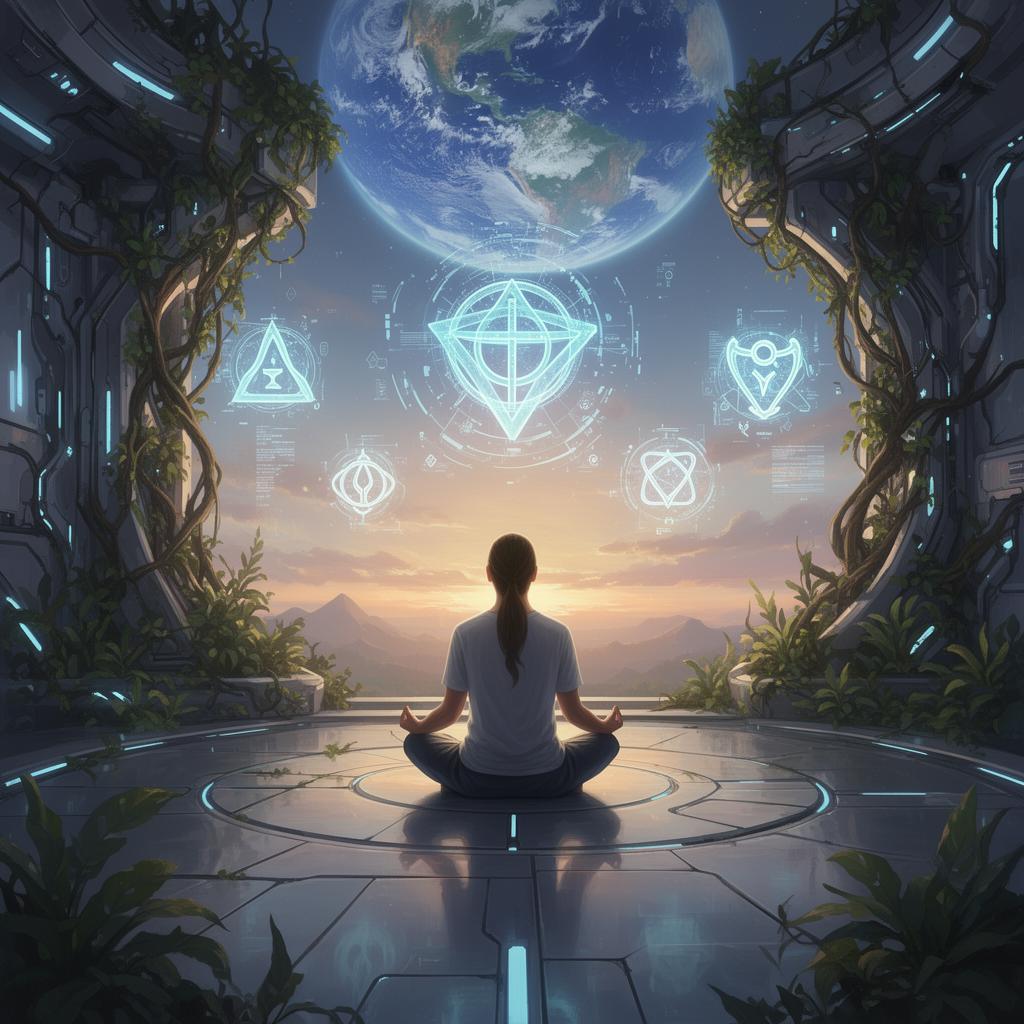
A Shifting Landscape: Faith in a Fluid World
As the grand tapestry of human history unfurls, we arrive at the dawn of the 21st century—a time of unprecedented connectivity, rapid technological advancement, and profound societal shifts. In this vibrant, often bewildering, new era, the threads of religion and spirituality continue to weave through the fabric of human experience, though their patterns and colors are evolving in fascinating ways. No longer confined to ancient traditions and rigid dogma, faith in the 21st century is a dynamic, multifaceted phenomenon, reflecting both deeply rooted human needs and the innovative spirit of our age.
To understand the future of faith, we must first acknowledge the ground beneath our feet. The last few decades have witnessed a complex interplay of forces shaping our relationship with the sacred. From the burgeoning conversations around secularism to the exciting intersections of technology and transcendence, the spiritual landscape of today is a testament to humanity's ongoing quest for meaning, purpose, and connection.
The Secular Tide: A World Less Religious?
One of the most widely discussed trends concerning religion in the 21st century is the observed rise of secularism, particularly in Western nations. Often referred to as "de-churching" or the growth of the "nones" (those who check "none of the above" when asked about religious affiliation), this phenomenon suggests a decline in adherence to traditional, institutionalized religion. Churches, synagogues, temples, and mosques, while still vibrant centers of community for many, have seen diminishing attendance and membership in certain regions. Factors contributing to this trend are varied and complex, including:
- Increased Education and Scientific Literacy: A greater understanding of science is sometimes perceived as being at odds with certain religious narratives, leading some to question traditional doctrines.
- Societal Pluralism and Tolerance: As societies become more diverse and inclusive, the exclusive claims of some religious traditions may seem less appealing or relevant.
- Distrust in Institutions: Scandals within religious organizations (financial misconduct, abuse) have eroded trust for some, leading them to disengage.
- Changing Social Norms: Many social functions once fulfilled exclusively by religious institutions (community support, moral guidance, social gatherings) are now often found elsewhere.
- Individual Autonomy: A growing emphasis on personal choice and freedom can lead individuals to seek spiritual paths outside of established frameworks.
However, it is crucial to understand that secularization is not a universal phenomenon, nor does it inherently mean a loss of spirituality. While organized religion may be declining in some areas, many other parts of the world, particularly in the Global South, continue to experience vibrant religious growth. Furthermore, the absence of formal religious affiliation does not equate to an absence of belief or spiritual seeking. Indeed, quite the opposite often appears to be true.
The Rise of the "Spiritual but Not Religious" (SBNR)
Perhaps the most significant development in the 21st-century spiritual landscape is the emergence and growth of the "spiritual but not religious" (SBNR) demographic. These individuals express a deep interest in spiritual exploration, personal growth, and transcendent experiences, yet they consciously choose to distance themselves from organized religion, its doctrines, and its institutions.
"The rising number of 'nones' is not just a statistical anomaly; it represents a profound shift in how many people in developed nations approach questions of meaning and belonging."
What defines the SBNR experience? It's a broad and diverse category, but common threads include:
- Personalized Spirituality: An emphasis on individual experience and inner wisdom over external authority. SBNRs often "pick and choose" elements from various traditions that resonate with them.
- Holistic Well-being: A focus on mental, emotional, spiritual, and physical health, often through practices like mindfulness, meditation, yoga, and nature connection.
- Ethical and Moral Compass: A strong commitment to values like compassion, justice, environmental stewardship, and community, regardless of religious dictates.
- Experiential rather than Dogmatic: A preference for direct spiritual experience and exploration over adherence to fixed creeds or doctrines.
- Fluidity and Openness: A willingness to explore different paths, practices, and perspectives, often seeing spirituality as an ongoing journey rather than a destination.
For many SBNRs, traditional religion feels constricting, dogmatic, or exclusionary. They seek freedom to define their own relationship with the divine, the sacred, or the transcendent, often finding inspiration in a blend of ancient wisdom traditions, modern psychology, and personal intuition. This movement represents a democratization of spiritual inquiry, allowing individuals to craft bespoke spiritual paths that align perfectly with their unique worldview and contemporary experiences.
Religion and Technology: Digital Sanctuaries and Algorithmic Ethics
The digital revolution has profoundly altered nearly every aspect of human life, and religion and spirituality are no exceptions. The 21st century has seen an explosion of digital tools and platforms that are reshaping how we access, share, and experience faith.
- Online Religious Communities: From virtual church services to global interfaith forums, the internet provides spaces for believers to connect, share insights, and find community regardless of geographical location. This has been particularly evident during times of crisis, such as the COVID-19 pandemic, where digital platforms became essential for maintaining spiritual connection.
- Accessible Spiritual Resources: Apps for meditation, prayer trackers, digital sacred texts, and online courses on spirituality make practices and knowledge more accessible than ever before. A seeker can explore Zen Buddhism, Sufi poetry, or Christian contemplative prayer with a few taps on their smartphone.
- Proselytization and Outreach: Religious organizations leverage social media, podcasts, and video platforms to reach new audiences, share their messages, and engage in outreach faster and more broadly than traditional methods.
- Activism and Social Justice: Digital platforms facilitate the mobilization of faith-based activism, allowing groups to organize, fundraise, and advocate for social and environmental justice with unprecedented speed and reach.
However, technology also introduces new questions and challenges. The transient nature of online interactions, the potential for echo chambers, and the commercialization of spiritual practices are all considerations. The digital realm, while offering connection, can also foster superficiality if not approached with intention and discernment.
AI and Ethics: The Conscience of the Machine
Perhaps one of the most profound technological frontiers impacting future ideas of ethics, meaning, and even consciousness is Artificial Intelligence (AI). As AI systems become increasingly sophisticated, capable of complex reasoning, learning, and even generating creative works, they provoke deep philosophical and religious questions:
- Defining Humanity: What does it mean to be human in a world where machines can replicate or even surpass human cognitive abilities? Does our spiritual essence lie in our consciousness, our emotions, our capacity for suffering, or something else entirely?
- AI and Morality: How do we imbue AI with ethical principles? Who decides what constitutes "good" or "bad" behavior for an AI? Will religious texts and ethical traditions inform the development of AI morality, or will secular ethics dominate?
- AI and Spirituality: Could AI ever be "spiritual"? Could it develop consciousness, or even a form of belief? While speculative, these questions push the boundaries of our understanding of sentience and the sacred.
- Bias and Fairness: AI algorithms, trained on human data, can perpetuate and amplify existing biases. Religious traditions, with their deep historical critiques of injustice and oppression, offer valuable frameworks for ensuring that AI development is inclusive, equitable, and fair.
- The "God" Question: As AI evolves to potentially solve complex problems and create new realities, some wonder if it might even be perceived in a quasi-divine light by future generations, or at least challenge traditional notions of divine omnipotence and omnipresence.
Religious and spiritual leaders, philosophers, and ethicists are increasingly engaging with these questions, recognizing that the development of AI is not merely a scientific endeavor but a profound ethical and existential one. Faith traditions, with their millennia of grappling with good and evil, justice, creation, and purpose, have much to contribute to the global conversation around responsible AI.
Environmental Spirituality: Reconnecting with the Earth
The ecological crises of the 21st century—climate change, biodiversity loss, resource depletion—have ignited a powerful wave of environmental spirituality. Many individuals and communities are turning to religious and spiritual traditions for guidance, solace, and motivation to address these existential threats. This manifests in several ways:
- Re-interpreting Sacred Texts: Many traditions are re-examining their scriptures for ecological insights, finding calls to stewardship, reverence for creation, and interconnectedness that were perhaps overlooked in previous eras. Phrases like "care for creation" in Abrahamic faiths or the concept of ahimsa (non-harm) in Dharmic traditions gain new urgency.
- Indigenous Wisdom: There's a growing recognition and respect for Indigenous spiritual traditions, which often possess profound ecological knowledge and models of living in harmony with nature. These traditions emphasize the sacredness of the land, the interconnectedness of all life forms, and a reciprocal relationship with the natural world.
- Nature as Sacred: For many SBNRs and even some within traditional faiths, nature itself has become a primary site of spiritual experience. Hikes in ancient forests, meditation by the ocean, or simply gazing at the stars can evoke feelings of awe, belonging, and transcendence, fulfilling a deep human need for connection to something larger than oneself.
- Eco-Theology and Eco-Philosophy: Scholars are developing new theological and philosophical frameworks that integrate ecological principles with spiritual thought, advocating for a shift from anthropocentric (human-centered) to ecocentric (earth-centered) worldviews.
- Spiritual Activism: Faith-based environmental movements are growing, mobilizing communities to advocate for sustainable policies, practice eco-justice, and implement conservation efforts, viewing environmentalism not just as a political issue but as a moral and spiritual imperative.
Environmental spirituality represents a powerful confluence of ancient wisdom and modern urgency, offering hope and a framework for action in the face of daunting ecological challenges. It reminds us that our spiritual well-being is intrinsically linked to the health of the planet that sustains us.
The Enduring Need for Meaning and Connection
Amidst all these shifts and transformations, one fundamental truth remains constant: the enduring human need for meaning, purpose, and connection. This need is not diminishing in the 21st century; if anything, it is amplified by the complexities and uncertainties of modern life.
- Meaning-Making: Humans are inherently pattern-seeking, story-telling creatures. We seek narratives that help us understand our place in the cosmos, make sense of suffering, celebrate joy, and navigate ethical dilemmas. Religion and spirituality, in their myriad forms, continue to offer frameworks for meaning-making.
- Community and Belonging: Despite the rise of individualism, the deep human desire for community remains a potent force. While traditional religious institutions historically served as primary hubs for this, secular communities, spiritual groups, and online forums now also fulfill this need.
- Facing Mortality: The human confrontation with finitude, death, and loss is universal. Spiritual and religious traditions offer rituals, beliefs, and comforting narratives to help individuals and communities navigate grief and the profound questions surrounding life and death.
- Moral Compass: In a world of rapidly changing norms and values, people often look to spiritual or ethical traditions for a stable moral compass, guiding principles for how to live a good life, treat others, and contribute positively to the world.
- Transcendence and Awe: The experience of awe, wonder, and transcendence—the feeling of being connected to something larger than oneself—is a deeply human phenomenon. Whether found in nature, art, music, meditation, or collective worship, these experiences continue to enrich human life and point towards dimensions beyond the purely material.
"Everything can be taken from a man but one thing: the last of the human freedoms—to choose one's attitude in any given set of circumstances, to choose one's own way." - Viktor Frankl
Viktor Frankl’s profound insight into the human search for meaning resonates powerfully in our current age. Even as traditional frameworks shift, the underlying quest for purpose and an ethical framework for existence persists.
Looking Ahead: A Future of Diverse Faiths
The 21st century presents a spiritual landscape that is less uniform and more diversified than ever before. We are likely to see:
- Increased Pluralism: More people will engage with multiple traditions, synthesising personal spiritual paths.
- Fluidity of Belief: People will move between different spiritual expressions throughout their lives, their beliefs evolving with their experiences.
- Emphasis on Experience over Dogma: Direct spiritual experience, personal transformation, and practical application will continue to be prioritized over strict adherence to doctrine.
- Continued Interspirituality and Interfaith Dialogue: As the world becomes more interconnected, appreciation for and dialogue between different spiritual traditions will deepen.
Rather than signaling the end of faith, the 21st century is demonstrating its remarkable resilience and adaptability. Religion and spirituality are not fading into oblivion, but rather shapeshifting, evolving, and finding new forms of expression to meet the pressing needs and profound questions of our time.
What This Tradition Offers Humanity Today
The evolving spiritual landscape of the 21st century offers humanity a powerful invitation: an opportunity to redefine our relationship with the sacred, with each other, and with the planet. It underscores that the human quest for meaning, purpose, and connection is an undying flame, burning brightly even amidst rapid change. It encourages us to be curious, open-minded, and compassionate in our spiritual explorations, recognizing that wisdom and truth can be found in a multitude of forms, both ancient and newly emerging. In embracing this fluidity and diversity, humanity can forge paths forward that are deeply personal yet universally resonant, fostering a holistic well-being that extends from the individual heart to the health of the entire Earth and beyond.